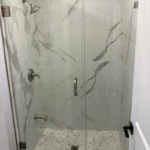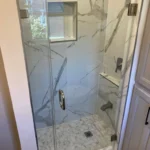
If you’re getting a frameless shower door, one of the first questions on the estimate is glass thickness. The two standard choices are 3/8 inch (about 10 mm) and 1/2 inch (about 12 mm). Both are tempered safety glass. Both look frameless. The difference is how the door feels and what it costs.
How they feel
This is the difference most people notice. A 1/2 inch door is stiffer. When you swing it open, it moves as one solid piece and stops cleanly. A 3/8 inch door is still solid, but on a wide door you can feel a little more flex when you push the handle.
On fixed panels that never move, most people can’t tell the two apart.
Weight
Half-inch glass weighs roughly 6.5 pounds per square foot. Three-eighths inch is closer to 5 pounds. On a typical 28 by 72 inch door, that’s a difference of about 20 pounds.
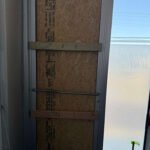
The extra weight is why 1/2 inch doors need heavier hinges, and why the wall behind the hinges matters. Hinges have to screw into solid framing or blocking, not just tile and drywall. A good installer checks this when they measure.
Cost
Half-inch glass costs more for three reasons: more glass, heavier hardware and more effort to carry and set. The jump is usually noticeable but not huge on a single door. It adds up on large enclosures with several panels.
Width and height limits
Every hinge has a maximum door weight and width it can carry. With 1/2 inch glass you hit that limit sooner, so very wide doors sometimes work better in 3/8 inch, or with a pivot hinge at the top and bottom instead of wall hinges. Your installer should tell you if your door size is close to the limit.
Edges and look
Both thicknesses get polished edges. Half-inch glass has a slightly heavier edge that some people like on a clean, modern shower. If you’re using low-iron glass to cut the green tint, the edge looks clearer on either thickness.
Which one to choose
A simple guide:
- Pick 1/2 inch for a hinged door that people use every day, especially if you want the most solid feel.
- Pick 3/8 inch for fixed panels, smaller showers, tighter budgets, or very wide doors where weight becomes a problem.
- Mix them: some homeowners use 1/2 inch for the door and 3/8 inch for the fixed panel. It keeps the feel where you touch it and saves a little on the rest.
Either way, the glass should be tempered and meet ANSI Z97.1, the safety standard for glass in showers and doors. If tempered glass ever breaks, it falls into small pieces instead of sharp shards.
Seeing it in person
The easiest way to decide is to feel both. When we come out to measure, we can talk through which thickness fits your layout and how it changes the price.
See our custom frameless shower enclosures or read what drives the price of a frameless shower enclosure. To book a free measurement in DC, Maryland or Northern Virginia, call 202-717-7099.